1. Industry Background and Market Demand
Modern medical diagnosis and treatment scenarios rely heavily on precision electronic medical equipment and continuous power supply systems, where power safety is a core prerequisite for avoiding medical accidents. Unlike conventional industrial
power distribution systems, medical grade IT isolated power systems eliminate neutral grounding connections, effectively preventing leakage current and electric shock risks in humid, high-precision medical environments such as operating rooms, intensive care units (ICUs), and dialysis rooms.
Global medical safety regulations, including IEC 60601 and IEC 60364-7-710, mandate real-time insulation monitoring for medical isolated power circuits to ensure uninterrupted power supply and zero electric shock hazards during patient treatment. With the continuous upgrading of medical infrastructure and the increasing popularity of minimally invasive surgery, life support equipment and implantable medical devices, the demand for high-precision, multi-functional, intelligent insulation monitoring equipment has grown rapidly. Traditional medical power monitoring devices feature single monitoring parameters, low data processing accuracy, and lack of comprehensive abnormal early warning mechanisms, which cannot meet the refined safety management needs of modern hospitals. This creates a sustained market demand for integrated, high-stability medical IT insulation monitoring solutions.
2. Core Concept and Key Technology
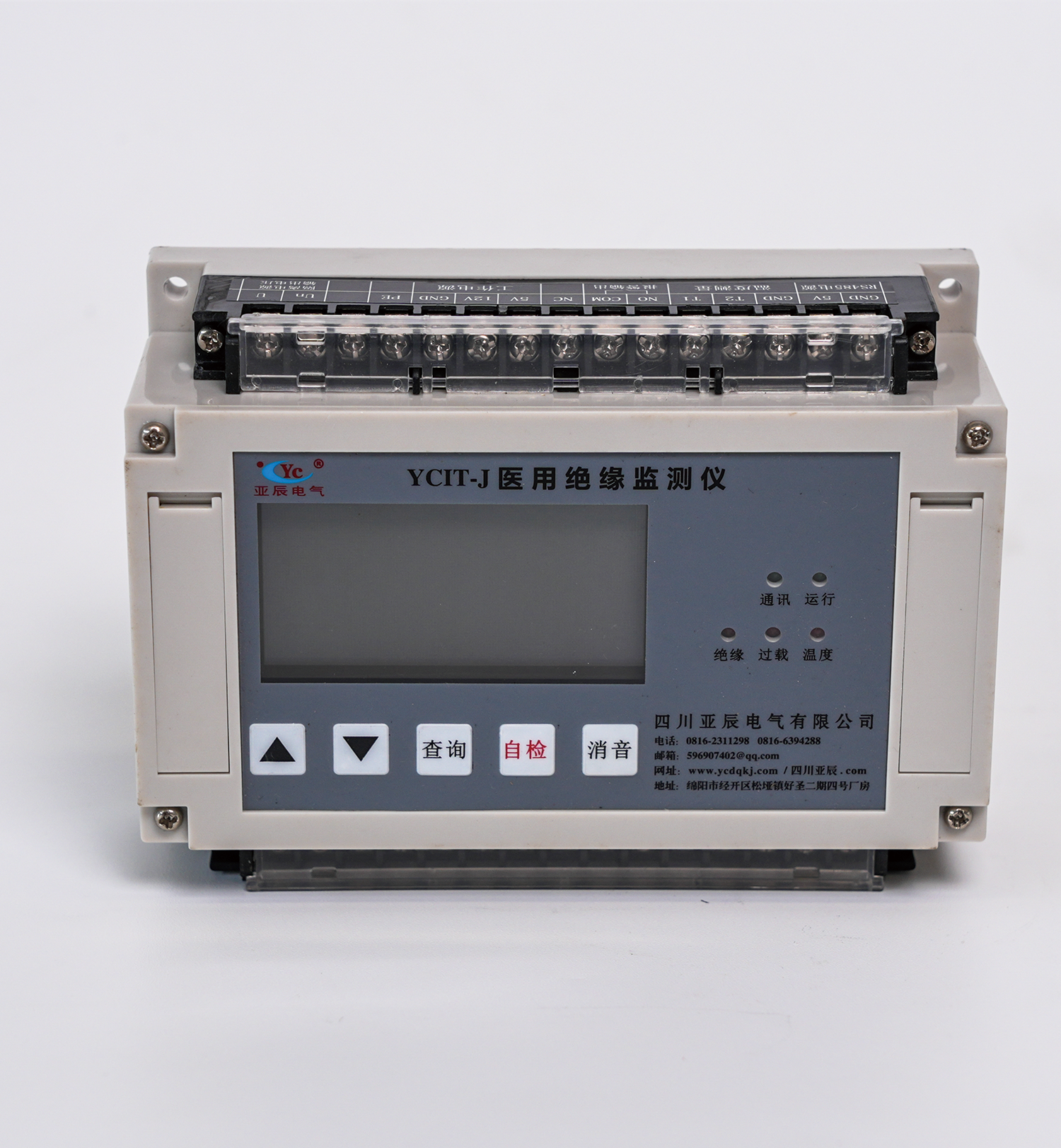
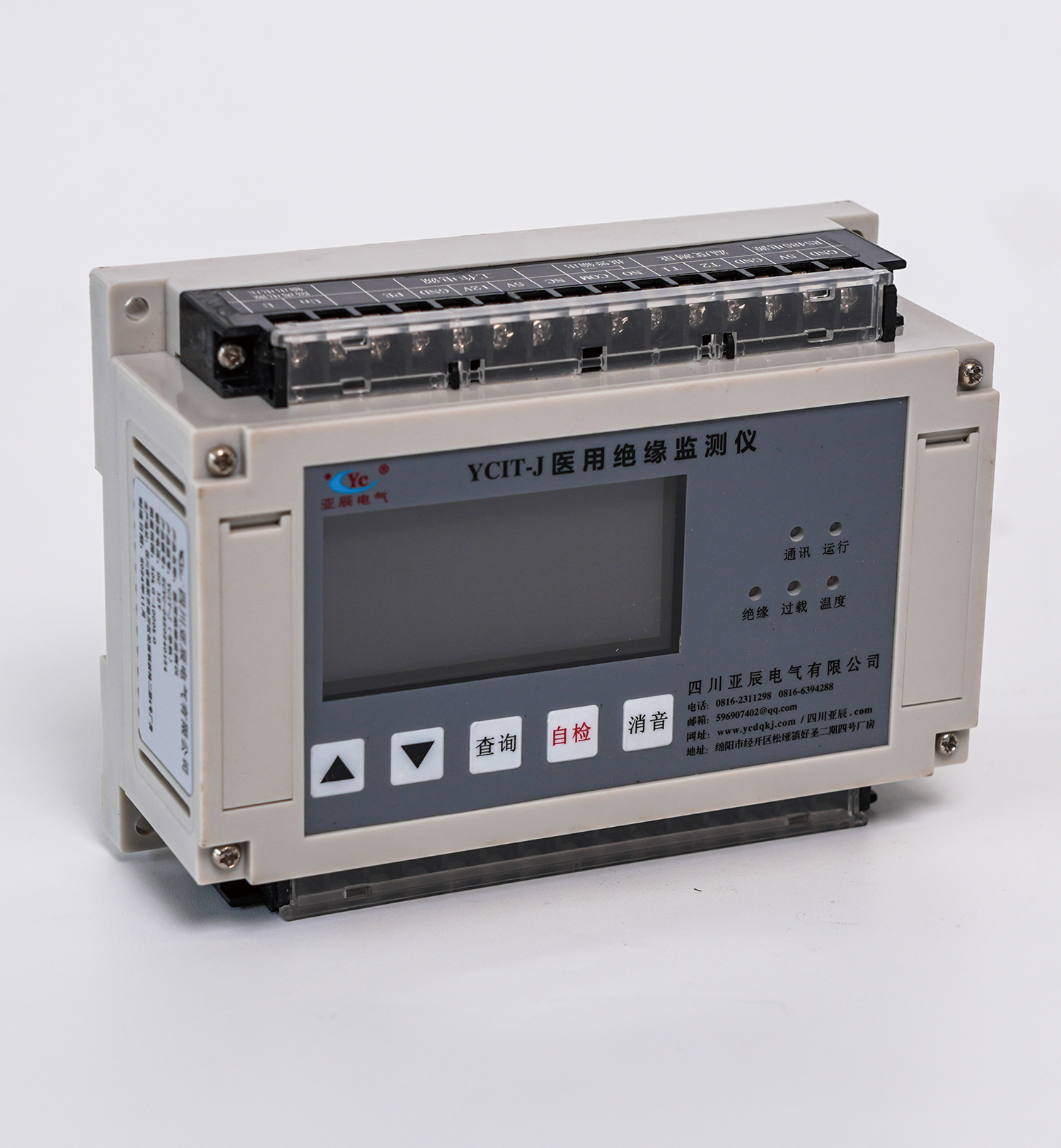
The YCIT-J series medical IT insulation monitoring instrument is a dedicated monitoring device tailored for medical isolation transformer-based IT power distribution circuits. Its core working principle is based on high-speed signal acquisition and algorithm analysis, realizing full-parameter real-time perception and abnormal judgment of isolated power systems.
The device adopts a 32-bit ARM processor as the core data processing unit, which delivers high-speed operational capability and stable data processing performance, ensuring synchronous collection, calculation and analysis of multiple power parameters without data delay or distortion. Different from single-chip microcomputer-based conventional monitoring equipment, the 32-bit ARM architecture supports multi-task parallel processing, enabling simultaneous monitoring of insulation impedance, voltage, power, temperature and harmonic parameters.
Equipped with a 2.8-inch TFT color touch screen as the human-machine interaction carrier, the instrument realizes visualized data display and intuitive parameter setting. The core monitoring technology covers AC/DC dual-system insulation detection, high-precision residual current sampling, and line harmonic analysis, which can accurately capture subtle parameter changes in medical isolated power circuits and provide reliable data support for system safety assessment. The built-in self-checking and calibration algorithm further eliminates system detection errors caused by long-term operation and environmental interference, ensuring long-term monitoring accuracy of the equipment.
3. Product Performance and Functional Architecture
The YCIT-J series medical IT insulation monitoring instrument integrates multi-dimensional power parameter monitoring, abnormal alarm, self-calibration and data transmission functions, covering the full operational state monitoring of medical IT isolated power systems. Its core performance and functional modules are as follows:
3.1 Full-Parameter Monitoring Performance
The device supports simultaneous monitoring of AC and DC isolated power supply systems, covering core parameters including line insulation impedance, system voltage, apparent power and active power. It realizes full-cycle temperature detection of the primary and secondary ends of medical isolation transformers, effectively grasping the operating temperature state of core power isolation equipment. In addition, it can monitor mains and backup power input voltage, system residual current, power output waveform and line harmonic content, covering all key indicators that affect the safety and stability of medical power systems. The harmonic detection function can accurately identify line harmonic distortion, providing effective basis for subsequent harmonic suppression and power quality optimization.
3.2 Early Warning and Alarm Mechanism
The instrument is equipped with a threshold intelligent judgment system. When key parameters such as system insulation resistance, transformer primary temperature, and system overload residual current exceed the preset safety range, it will trigger synchronous audible and visual alarm signals. The graded warning and alarm mechanism distinguishes early hidden dangers and serious faults, helping medical electrical maintenance personnel quickly locate fault types and risk levels, and realize rapid troubleshooting.
3.3 Self-Calibration and Communication Capability
With independent self-checking and calibration functions, the equipment can automatically complete internal circuit detection, parameter calibration and error correction during startup and long-term operation, avoiding monitoring accuracy degradation caused by component aging and environmental changes. Dual RS485 communication ports are reserved to support stable data transmission and remote data interaction, which can be connected to hospital power monitoring management systems to realize centralized remote monitoring and data recording of multiple IT power circuits.
3.4 Human-Machine Interaction Design
The 2.8-inch TFT color touch screen simplifies parameter query, threshold setting and system debugging operations. The visualized data interface displays real-time operating parameters and historical fault records in a classified manner, reducing the operation threshold for electrical maintenance personnel and improving on-site management efficiency.
4. Key Factors Affecting Product Quality and Performance
The operational stability and detection accuracy of the medical IT insulation monitoring instrument are directly related to medical power safety, and its core performance is affected by multiple key factors. First, the performance of the 32-bit ARM processor determines the equipment’s data processing speed and multi-task operation stability. Processors with low operational efficiency are prone to data lag and parameter calculation errors under high-frequency sampling conditions.
Second, the precision of the signal acquisition module is the core factor affecting detection accuracy. Medical power systems have low residual current and subtle insulation impedance changes, so high-sensitivity sampling components are required to avoid missed detection and false detection. Third, the self-calibration algorithm logic determines the equipment’s long-term operational stability. Adaptive calibration algorithms can offset environmental temperature drift and component aging errors, while fixed algorithms will lead to gradual accuracy degradation.
In addition, the anti-interference design of the equipment circuit is crucial. Medical sites are equipped with a large number of high-frequency medical devices, which produce electromagnetic interference. Optimized circuit shielding and anti-interference structure design can ensure stable operation of the monitoring instrument in complex electromagnetic environments. The stability of the RS485 communication module also affects remote data transmission accuracy and system linkage efficiency.
5. Industry Pain Points and Technical Solutions
5.1 Main Industry Pain Points
At present, most traditional medical power monitoring devices on the market have functional limitations: single monitoring parameters, unable to cover transformer temperature, line harmonics and residual current indicators, resulting in incomplete system safety assessment. Most products lack independent self-calibration functions, and long-term operation will lead to reduced detection accuracy, requiring frequent manual debugging by personnel. In addition, traditional equipment adopts single communication interface design, with poor expandability, unable to adapt to the centralized intelligent management mode of modern hospital power systems. Moreover, most devices use single-color screen display with cumbersome operation, low on-site maintenance efficiency, and lack of graded alarm mechanisms, making it difficult to quickly distinguish fault risk levels.
5.2 Targeted Solutions of YCIT-J Series
The YCIT-J series medical IT insulation monitoring instrument solves the above industry pain points through integrated functional design. It realizes full-parameter coverage monitoring of AC/DC dual systems, making up for the deficiency of single monitoring indicators of traditional equipment. The built-in automatic self-checking and calibration function eliminates the need for frequent manual debugging and maintains long-term detection accuracy. Dual RS485 communication ports improve equipment expandability, adapting to hospital intelligent power management systems. The color touch screen visualization operation and graded audible and visual alarm mechanism significantly improve the efficiency of on-site fault diagnosis and maintenance.
6. Application Scenarios and Industry Cases
As a special safety monitoring device for medical IT isolated power systems, the YCIT-J series medical IT insulation monitoring instrument is widely applicable to core medical scenarios with high power safety requirements. In hospital operating rooms, it monitors the power supply state of surgical precision equipment in real time, avoiding surgical interruption and patient electric shock risks caused by insulation faults. In ICUs and neonatal intensive care units, it ensures the stable operation of life support equipment such as ventilators and defibrillators, and provides early warning of power system hidden dangers.
In addition, the equipment is suitable for medical scenarios such as hemodialysis rooms, endoscopic examination rooms and dental treatment rooms, as well as medical isolation power transformation and upgrading projects of tertiary hospitals and specialized medical institutions. In practical industry applications, the equipment can effectively reduce the electric shock risk of patients and medical staff, realize zero-shutdown maintenance of medical power systems, and greatly improve the safety and continuity of medical power supply.
7. Current Industry Trends and Future Development Directions
The global medical power safety industry is currently developing towards intelligence, integration and remote visualization. With the continuous promotion of hospital intelligent construction, single parameter monitoring equipment can no longer meet the refined management needs of medical power systems, and multi-functional integrated monitoring equipment has become the mainstream market trend. At the same time, remote data transmission, cloud data storage and intelligent fault diagnosis functions have become the standard configuration of high-end medical power monitoring equipment.
In the future, medical IT insulation monitoring instruments will further upgrade in three dimensions. First, intelligent algorithm iteration will realize predictive fault diagnosis, predict potential insulation aging and component faults of power systems in advance, and change from passive alarm to active early warning. Second, the equipment will be compatible with more industrial Internet protocols, realizing seamless connection with hospital IoT management platforms and realizing full-link intelligent management of power systems. Third, miniaturization and low-power design will become a development direction, adapting to the compact layout requirements of modern medical equipment rooms while reducing equipment operation energy consumption. In addition, higher precision harmonic analysis and power quality optimization functions will be further optimized to improve the overall operational quality of medical isolated power systems.
8. Industry FAQ
Q1: What is the core difference between medical IT insulation monitoring instruments and conventional industrial insulation monitoring equipment?
A1: Medical scenarios have stricter safety and stability requirements. The YCIT-J series equipment is optimized for medical isolated power systems, supporting AC/DC dual-system simultaneous monitoring, with higher detection accuracy for subtle residual current and insulation impedance changes. It is equipped with professional medical-grade fault alarm logic and anti-electromagnetic interference design, which can adapt to complex medical electromagnetic environments, while industrial equipment cannot meet medical safety regulation standards.
Q2: Does the equipment need regular manual calibration during long-term operation?
A2: No. The YCIT-J series medical IT insulation monitoring instrument has built-in automatic self-checking and calibration functions, which can complete real-time error correction and parameter calibration independently during operation. Regular manual debugging is not required, which reduces later operation and maintenance costs.
Q3: Can the equipment be adapted to old medical power system transformation projects?
A3: Yes. The equipment supports wide-range voltage monitoring of mains and backup power supply, with strong compatibility. The dual RS485 communication interface supports docking with most conventional hospital power management systems, and the simplified installation and debugging design can meet the transformation needs of old medical institutions without large-scale circuit modification.
Q4: What safety risks can the equipment effectively avoid in medical scenarios?
A4: It can accurately monitor insulation damage, line overload, transformer overheating, harmonic distortion and other hidden dangers of medical power systems, trigger early warning alarms in time, avoid patient and medical staff electric shock accidents, and prevent medical equipment failure and treatment interruption caused by power parameter abnormalities, ensuring the continuity and safety of medical treatment.

 RELATED
 RELATED
 RELATED
 RELATED

 Pусский
 العربية
 中文
中文 қазақ
қазақ



 WhatsApp
 Phone
Phone