1. Industry Background & Market Demand
Global
power grid standardization and residential and commercial electrification upgrades form the core driving force of the meter box market. In European and North American markets, power supply authorities have unified strict specifications for user power metering, line protection and circuit management, mandating independent closed installation environments for energy metering equipment and low-voltage distribution components. With the continuous expansion of urban residential communities, commercial retail facilities and small and medium-sized industrial parks, the demand for standardized, safe and durable power metering carrier equipment continues to rise steadily.
In recent years, the renovation of old power grids in Europe and the rapid growth of new commercial construction in North America have further boosted market demand. Traditional exposed wiring and simple temporary meter installation modes can no longer meet the current standards of electrical safety, fire prevention and intelligent power management. As a core supporting component of terminal power distribution, the meter box has become a mandatory standard configuration for household and commercial power access, with rigid market demand and low substitution attributes. Meanwhile, the iteration of intelligent power grid systems also puts forward higher requirements for the structural compatibility, environmental adaptability and intelligent expansion of terminal meter boxes.
2. Core Concept & Key Technical Principles
A meter box is a standardized enclosed electrical cabinet dedicated to the centralized installation, protection and operation management of power metering and low-voltage distribution equipment. Its core technical orientation is to build a safe, isolated and maintainable working environment for
energy meters, transformers, incoming protection devices and outgoing switches, and support standardized billing and metering work for power supply departments.
The key technical logic of the product focuses on three core dimensions: electrical safety isolation, precise metering environment guarantee and convenient standardized maintenance. In terms of electrical performance, it follows low-voltage power distribution safety standards to realize physical isolation between live parts and external environment, preventing electric leakage, short circuit and accidental contact risks. In terms of metering guarantee, the closed and stable internal structure avoids the interference of external temperature, humidity and mechanical vibration on the measurement accuracy of energy meters. In terms of engineering application, the modular internal layout realizes unified installation and quick maintenance of metering and protection components, matching the standardized operation process of power supply enterprises.
3. Product Structure, Performance, Materials & Manufacturing Process
3.1 Product Structure
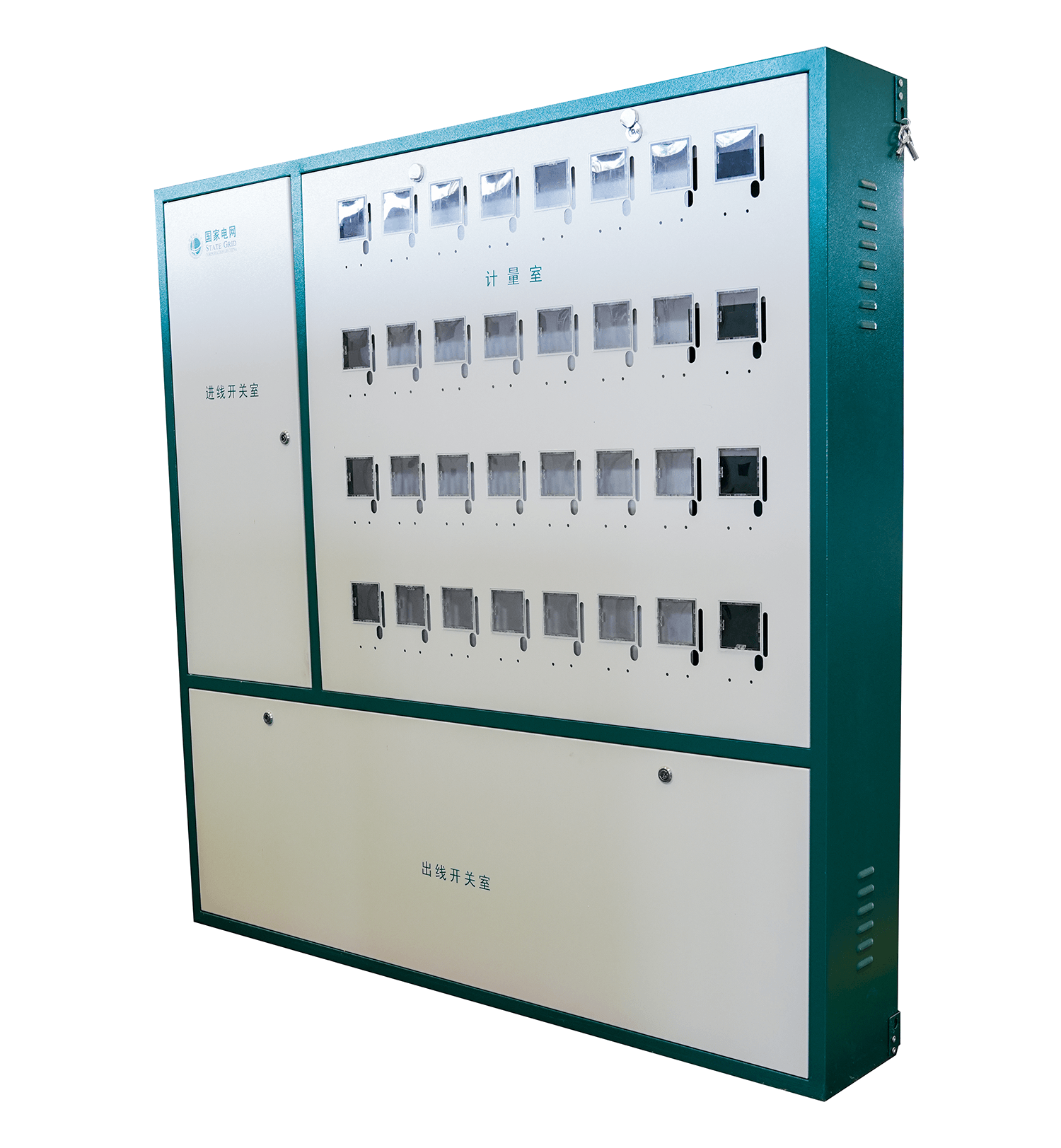
The mainstream meter box adopts a split modular structure, including an outer protective shell, internal mounting base, independent wiring cavity, lockable access door and reserved heat dissipation and wiring ports. The internal space is partitioned according to functional modules, which can independently place energy meters, incoming line
circuit breakers, outgoing line switches and miniature transformers, realizing physical separation of metering unit and control unit. The centralized meter box for residential scenarios adopts a multi-grid integrated structure, which can realize centralized installation and independent management of single-phase meters for multiple households, with independent locking and wiring areas for each household to avoid mutual interference.
3.2 Core Performance Indicators
The product’s core performance covers environmental adaptability, electrical safety and structural durability. The protection grade reaches IP54 or above, which can effectively prevent dust invasion and rainwater splashing, adapting to outdoor wall-mounted and indoor corridor installation environments. It has excellent insulation performance, with the surface insulation resistance meeting international low-voltage electrical standards, avoiding leakage risks under long-term live operation. In terms of structural performance, it has mechanical anti-collision and anti-vandalism capabilities, and can resist conventional external impact and artificial damage. In addition, the product has good heat dissipation performance, which can avoid equipment aging and measurement deviation caused by excessive internal temperature during long-term operation of electrical components.
3.3 Main Materials
Commercial and industrial grade meter boxes mainly use cold-rolled steel plate and high-strength ABS engineering plastic as the main materials. Steel plate meter boxes are treated with electrostatic spraying and anti-rust phosphating process, with high structural strength and strong anti-corrosion ability, suitable for outdoor and harsh industrial environments. ABS plastic meter boxes have the advantages of insulation, light weight and low temperature resistance, no conduction risk, and are mostly used in indoor residential and commercial scenarios. The internal mounting guide rails and fixing parts are made of galvanized steel, which ensures long-term rust resistance and installation stability.
3.4 Manufacturing Process
The whole manufacturing process of the meter box follows standardized industrial production procedures. The shell is formed by one-time stamping and bending to ensure overall structural flatness and assembly accuracy. Metal products undergo multi-stage anti-rust treatment including degreasing, phosphating and electrostatic spraying to improve outdoor environmental adaptability. The internal partition and mounting structure are precisely positioned by numerical control cutting to ensure the matching accuracy of electrical components. All assembly processes adopt standardized fixture positioning, and the finished products pass strict insulation test, waterproof and dustproof test and load-bearing test before leaving the factory to ensure consistent product performance.
4. Key Factors Affecting Product Quality & Performance
Material selection is the primary factor determining the service life and safety performance of the meter box. Inferior thin steel plates or recycled ABS materials will lead to insufficient structural strength, easy deformation and cracking in long-term outdoor use, and cannot effectively resist environmental corrosion and external impact. Unqualified surface anti-rust and insulation treatment will cause shell rust, insulation attenuation and electric leakage risks after long-term operation.
Structural design rationality directly affects the operational safety and maintenance convenience of internal equipment. Unreasonable heat dissipation hole layout will lead to poor internal heat dissipation, resulting in overheating and aging of energy meters and switches, affecting metering accuracy and service life. Unreasonable partition design will cause wiring confusion, easy short circuit failure and difficult later maintenance.
Production process precision and quality inspection standards are key links to ensure stable product performance. Inaccurate stamping and bending size will lead to poor door closing tightness and reduced protection grade. Lack of strict factory electrical performance testing will lead to individual products with unqualified insulation performance, bringing potential safety hazards for terminal power consumption. In addition, the matching accuracy of internal mounting parts will affect the installation stability of metering equipment, and loose installation will cause vibration interference and metering deviation.
5. Supply Chain & Supplier Selection Criteria
The meter box industry chain is divided into upstream raw material supply, midstream product processing and downstream power engineering and terminal construction applications. Upstream core raw materials include cold-rolled steel plates, ABS plastic particles, galvanized accessories and insulating coatings, and the stability of raw material quality directly determines the basic performance of finished products.
For European and American B2B purchasers, supplier selection focuses on four core standards. First, product standard compliance: suppliers need to have complete CE, UL and other international electrical certification qualifications, and product performance meets IEC low-voltage distribution equipment standards. Second, production process capability: suppliers need to have standardized automated production lines and complete quality inspection systems to ensure batch product consistency. Third, customization capability: able to adjust structural size, internal layout and protection grade according to the differentiated needs of residential, commercial and industrial scenarios. Fourth, supply stability: with perfect inventory management and delivery cycle control capability, to meet the centralized procurement demand of power engineering projects.
6. Industry Pain Points & Common Technical Problems
6.1 Industry Pain Points
The first prominent pain point is inconsistent product standardization. Different manufacturers have differences in structural size, hole position layout and protection grade, resulting in poor compatibility of replacement and installation in engineering renovation projects, increasing construction and maintenance costs. Second, the environmental adaptability of low-end products is insufficient. Many low-cost meter boxes are prone to aging, discoloration, rust and water seepage after long-term outdoor use, which reduces the safety of internal power equipment. Third, the intelligent expansion of traditional products is insufficient, most products only have basic installation and protection functions, and lack reserved interfaces for intelligent metering and remote monitoring, which cannot adapt to the upgrading of smart grid.
6.2 Common Technical Problems
In actual engineering application, common problems include poor heat dissipation leading to equipment overheating, unqualified waterproof performance causing internal damp wiring aging, and unreasonable internal layout leading to difficult wiring and maintenance. In addition, some products have insufficient locking and anti-theft performance, which leads to unauthorized opening and private line modification, affecting the accuracy of power billing and metering and causing power management risks for power supply departments.
7. Application Scenarios & Industry Cases
The meter box has a wide range of terminal power distribution application scenarios, covering civil residential, commercial service and small industrial fields. In residential scenarios, one-household-one-meter single-phase meter boxes are widely used in urban residential buildings and rural household power transformation projects, realizing independent metering and safe power consumption management for each household. Residential centralized meter boxes are applied in high-rise residential corridors and community centralized power distribution rooms, realizing centralized management of multi-household metering equipment and reducing later maintenance costs.
In commercial scenarios, customized single-phase and three-phase meter boxes are used in retail shops, office buildings, catering venues and other places, adapting to the differentiated power consumption and metering needs of commercial terminals. In small industrial scenarios, high-protection three-phase meter boxes are applied in small processing factories, workshop power distribution and outdoor engineering temporary power consumption, matching the high-power power consumption and harsh on-site environment of industrial equipment.
Typical European engineering cases include community power grid renovation projects in Eastern Europe and residential supporting construction projects in Western Europe. The standardized IP54-grade insulated meter boxes are adopted to solve the problems of old equipment aging and poor safety of traditional open wiring. North American commercial park projects widely use modular three-phase meter boxes to realize unified metering and intelligent management of multi-storey commercial power consumption, effectively improving the operational efficiency of power supply management.
8. Current Industry Trends & Future Development Direction
At present, the global meter box industry is moving towards standardization, intellectualization and high environmental adaptability. First, regional standard unification is accelerating. European and American power management departments are continuously optimizing terminal power distribution equipment standards, promoting the unification of meter box size, protection grade and structural specifications, and improving product compatibility and interchangeability.
Second, intelligent upgrading is the core development trend. With the popularization of smart meters and remote power monitoring systems, new meter boxes are gradually equipped with reserved intelligent wiring interfaces, data transmission ports and sensor installation positions, which can support remote meter reading, power consumption monitoring and abnormal alarm functions, realizing the transformation from single protection and installation carrier to intelligent power management terminal.
Third, green and durable materials are widely applied. Environmentally friendly anti-corrosion coatings, high weather resistance modified plastic materials and lightweight high-strength alloy materials are gradually replacing traditional low-end materials, improving the service life of products and reducing the replacement and maintenance cost of power grid equipment. In addition, integrated modular design will become the mainstream, realizing quick assembly, convenient maintenance and flexible scene adaptation, and meeting the efficient construction needs of modern power engineering.
9. FAQ
Q1: What is the core difference between residential and industrial meter boxes?
The core differences lie in protection grade, structural bearing capacity and applicable voltage level. Residential meter boxes are mainly single-phase low-power products, with lightweight structure and basic waterproof and dustproof performance, suitable for indoor and mild outdoor environments. Industrial meter boxes adopt three-phase matching design, with higher structural strength, better anti-corrosion and heat dissipation performance, higher protection grade, and can adapt to high-power operation and harsh outdoor industrial environments.
Q2: How to judge whether the meter box is suitable for long-term outdoor installation?
It can be judged from three key indicators: protection grade not lower than IP54, complete outdoor anti-rust and anti-aging treatment of shell materials, and scientific outdoor heat dissipation and rainproof structural design. Products that meet the above standards can effectively resist rainwater erosion, ultraviolet aging and dust accumulation, and ensure long-term stable operation of internal metering equipment.
Q3: What failures are easily caused by unqualified meter box performance?
Unqualified products will lead to a series of hidden dangers: poor waterproof performance causes internal circuit damp and short circuit; insufficient heat dissipation leads to overheating of energy meters, resulting in inaccurate metering; weak structural strength causes shell deformation and equipment damage; unqualified insulation performance brings electric leakage and personal safety risks, increasing the failure rate and maintenance cost of terminal power distribution.
Q4: What certification standards do European and American market meter boxes need to meet?
Products entering the European market need to pass CE certification and comply with IEC 60439 low-voltage switchgear and controlgear assembly standards; products entering the North American market need UL certification, meeting local electrical safety and fire protection standards. All electrical performance and structural safety indicators need to meet regional standardized engineering application requirements.

 RELATED
 RELATED
 RELATED
 RELATED

 Pусский
 العربية
 中文
中文 қазақ
қазақ



 WhatsApp
 Phone
Phone