1. Industry Background & Market Demand
Medium-voltage ring main units (RMUs) are core distribution equipment widely deployed in urban
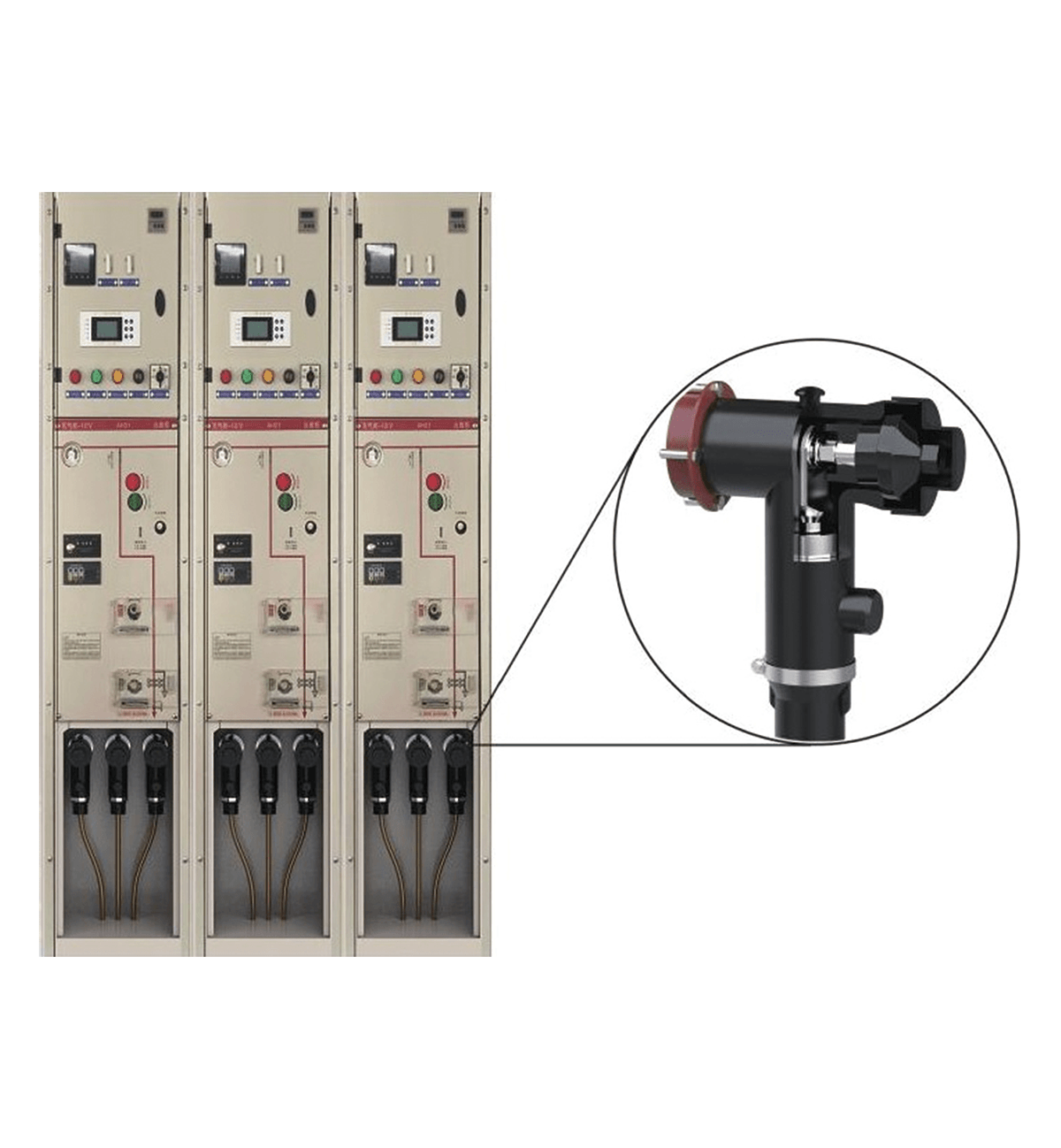
power grids, industrial power supply systems and box-type substation networks. Cable T-joints and plug terminals inside RMUs are key heat-generating components during long-term operation, affected by load fluctuation, contact aging and installation deviation. Overheating of these hidden nodes is the primary cause of insulation breakdown, partial discharge and even equipment burnout, accounting for more than 40% of medium-voltage distribution grid fault incidents.
With the global power grid’s upgrade toward intelligent operation and predictive maintenance, traditional periodic manual inspection and post-fault troubleshooting modes can no longer meet the reliability requirements of modern power systems. Power operation enterprises and industrial end-users in Europe and North America have put forward mandatory demands for real-time, high-precision and maintenance-free temperature monitoring of enclosed power equipment. The lack of effective embedded temperature detection solutions for RMU cable plugs has long formed a market gap, driving the iteration and popularization of dedicated ring main unit plug temperature measurement devices.
2. Core Technology Principle
The core of the system relies on passive wireless temperature measurement technology, which solves the technical bottleneck of temperature detection for fully enclosed insulated power components. Different from traditional active temperature measurement modules that require power supply and wiring, the passive wireless sensor adopts electromagnetic energy harvesting and resonant frequency temperature sensing principles. It absorbs electromagnetic energy from the operating high-voltage equipment’s electric field to realize self-power operation without built-in batteries or external power lines.
The sensor’s resonant frequency changes synchronously with the ambient temperature of the measured hot spot. The wireless temperature concentrator receives and demodulates the frequency signal through a dedicated radio frequency channel, converts the frequency deviation data into accurate temperature values, and realizes real-time data acquisition and analysis. This technical route fundamentally avoids the safety risks of wired wiring and active power supply in high-voltage insulated environments, and ensures long-term stable temperature sensing of RMU plug hot spots.
3. Product Structure, Performance & Manufacturing Process
3.1 Product Structure
The complete temperature measurement system consists of two core independent components: embedded passive wireless temperature sensors and wireless temperature concentrators. The sensor is designed with an integrated miniaturized structure, which can be fully embedded inside the insulation plug of RMU cable accessories, forming an integrated structure with the plug body. The wireless temperature concentrator is a wall-mounted or rail-mounted terminal suitable for substation and distribution box installation, supporting multi-point signal convergence and data transmission.
3.2 Core Performance Indicators
The embedded installation mode enables the sensor to fit closely with the plug hot spot, achieving true hot spot temperature monitoring rather than surface ambient temperature detection. The product supports a temperature measurement range of -40℃ to 125℃, with a measurement accuracy of ±0.5℃ and a data sampling interval adjustable from 1s to 60s. It has strong anti-electromagnetic interference capability, adapting to the strong electromagnetic field operating environment of high-voltage power equipment. The passive design ensures a service life of more than 15 years, matching the full life cycle of RMU equipment.
3.3 Materials & Manufacturing Process
The sensor shell adopts high-temperature resistant cross-linked polyethylene insulation material, which has the same insulation level and thermal expansion coefficient as the RMU plug accessories, ensuring no damage to the original insulation performance and structural stability of the equipment. The internal sensing chip is made of high-stability ceramic dielectric material, with excellent temperature resistance and aging resistance.
In terms of manufacturing technology, the product adopts integral embedding and secondary vulcanization molding process. The sensor is fixed and sealed inside the plug insulation layer through high-temperature integrated molding, which avoids loose contact and falling off caused by later assembly. The concentrator adopts industrial-grade SMT patch processing and waterproof and dustproof sealing process, reaching IP65 protection level, adapting to outdoor and harsh substation operating environments.
4. Key Factors Affecting Product Quality & Performance
First, embedding fitting accuracy is the core factor restricting temperature measurement authenticity. If the sensor cannot be closely laminated with the plug hot spot, thermal resistance will be generated, resulting in delayed and deviated temperature data. The precision of the secondary vulcanization molding process directly determines the fitting tightness between the sensor and the insulation plug.
Second, the stability of the sensing chip’s resonant frequency under strong electromagnetic interference affects measurement accuracy. Chips with poor anti-interference performance are prone to frequency drift in high-voltage operating environments, leading to data distortion. Third, the insulation matching degree between the sensor shell material and the original RMU plug material is crucial. Mismatched thermal expansion coefficients will cause structural cracking and insulation failure after long-term temperature cycling.
In addition, the signal receiving sensitivity and band filtering performance of the wireless temperature concentrator determine the effective transmission distance and multi-point data stability, which is a key indicator affecting the overall operating reliability of the temperature measurement system.
5. Supplier Selection Criteria
For core components such as passive sensing chips and industrial concentrator modules, suppliers need to meet strict industrial-grade power equipment certification standards. First, suppliers must have complete ISO 9001 quality management system certification and power equipment product qualification certification, with mature batch production capacity for high-voltage embedded sensing components.
Second, chip suppliers need to provide long-term stability test reports of resonant frequency under high temperature and strong electromagnetic field, ensuring product consistency in long-term operation. Third, processing and molding suppliers must have rich experience in power insulation accessory integration processing, to ensure the yield of embedded molding products and the stability of structural performance.
In terms of supply chain stability, priority is given to suppliers with localized after-sales service capabilities and continuous technical iteration support, to meet the long-term operation and maintenance and upgrade needs of power grid equipment.
6. Industry Pain Points & Common Technical Problems
The most prominent industry pain point is the failure of traditional temperature measurement methods to adapt to fully enclosed RMU structural characteristics. Traditional contact thermometers and infrared temperature measuring devices can only detect the external surface temperature of equipment, unable to penetrate the closed insulation structure to capture the real temperature of internal cable T-joints and plug hot spots, resulting in serious lag and omission of overheating fault early warning.
Active wireless temperature measurement products widely used in the market have inherent defects such as short battery life, frequent replacement and poor high-temperature resistance, which increase equipment operation and maintenance costs and hidden safety hazards. Wired temperature measurement schemes require destructive wiring transformation of sealed equipment, which will damage the original insulation performance of RMUs and cannot be applied in batches.
In addition, most conventional temperature monitoring systems have independent and closed data architecture, which cannot be seamlessly connected with substation management systems and cloud intelligent platforms, resulting in isolated temperature data and inability to form intelligent predictive analysis capabilities.
7. Application Scenarios & Industry Cases
The ring main unit plug temperature measurement device is applicable to all medium-voltage high-voltage power equipment with cable plug structures, covering power grid operation, industrial
power distribution, new energy power generation and other fields. Typical application scenarios include urban distribution network ring main units, indoor and outdoor cable distribution boxes, box-type substations, and industrial factory high-voltage power distribution equipment.
In European urban distribution grid renovation projects, the passive wireless temperature measurement system has been applied to batch RMU equipment reconstruction. By embedding sensors in cable plug insulation parts, the system realizes 24-hour online temperature monitoring of key hot spots. The operation data shows that the device can accurately capture abnormal temperature rise caused by loose contact and load overload, realizing early fault warning and reducing unplanned power outage frequency by more than 35%.
In North American industrial park box-type substation projects, the system realizes unified data convergence through wireless concentrators, and uploads temperature data to the cloud platform to support remote equipment operation and maintenance management, solving the problem of difficult real-time monitoring of scattered distribution equipment.
8. Industry Trends & Future Development Directions
With the global acceleration of smart grid construction, online state perception and predictive maintenance of power equipment have become the mainstream development trends of the industry. Passive wireless temperature measurement technology, as a non-intrusive, maintenance-free detection scheme, will gradually replace traditional manual inspection and active temperature measurement schemes, and become the standard configuration of medium-voltage distribution equipment.
In the future, the product will develop toward multi-dimensional state monitoring integration. On the basis of temperature measurement, it will integrate partial discharge detection, humidity monitoring and other functions to realize comprehensive state perception of RMU internal operating environment. At the same time, with the deep integration of big data and artificial intelligence algorithms, the system will realize intelligent fault diagnosis, temperature trend prediction and equipment life prediction, providing data support for the intelligent upgrade of primary power equipment.
In terms of hardware iteration, miniaturization, higher temperature resistance and stronger anti-interference performance will be the core optimization directions, adapting to more extreme industrial power distribution scenarios and fully enclosed high-voltage equipment operating environments.
9. FAQ
Q1: Will the embedded sensor installation damage the original insulation and safety performance of the ring main unit?
A1: No structural damage will be caused. The sensor is embedded and molded synchronously with the plug insulation material, adopting the same insulation grade material as the original equipment. The integral molding process ensures the integrity of the insulation structure, and the product has passed high-voltage withstand test and partial discharge test, which will not affect the safe operation of RMU equipment.
Q2: What is the effective signal transmission distance of the wireless temperature measurement system, and can it support multi-device networking?
A2: The effective wireless transmission distance in conventional substation environments reaches 50 meters, and the wireless temperature concentrator can support online networking of 30 or more sensors at the same time. It can meet the centralized monitoring needs of multiple ring main units and cable distribution boxes in a single power distribution room.
Q3: Does the passive sensor need regular maintenance and battery replacement?
A3: The passive sensor has no built-in battery and no active power consumption, relying on electric field energy harvesting for self-operation. It requires no manual maintenance and parts replacement during the whole life cycle, greatly reducing the later operation and maintenance cost of power equipment.
Q4: Can the device data be adapted to mainstream substation and cloud management platforms?
A4: The concentrator supports multiple standard communication protocols, which can be seamlessly connected with conventional substation communication management equipment. It can also upload data to industrial cloud platforms through Ethernet and 4G/5G modules, matching the data access requirements of intelligent primary equipment in smart grids.

 RELATED
 RELATED
 RELATED
 RELATED

 Pусский
 العربية
 中文
中文 қазақ
қазақ



 WhatsApp
 Phone
Phone